
Organizations are generating more data than ever before, but data only becomes a strategic asset when it is properly managed. Data management standards provide the frameworks, terminology, and best practices needed to ensure that data is accurate, consistent, secure, and valuable throughout its lifecycle.
Among the most influential standards and frameworks are the DAMA Data Management Body of Knowledge (DAMA-DMBOK) and the ISO 8000 series for data quality. Together, they provide complementary guidance for governing, managing, and improving enterprise data.
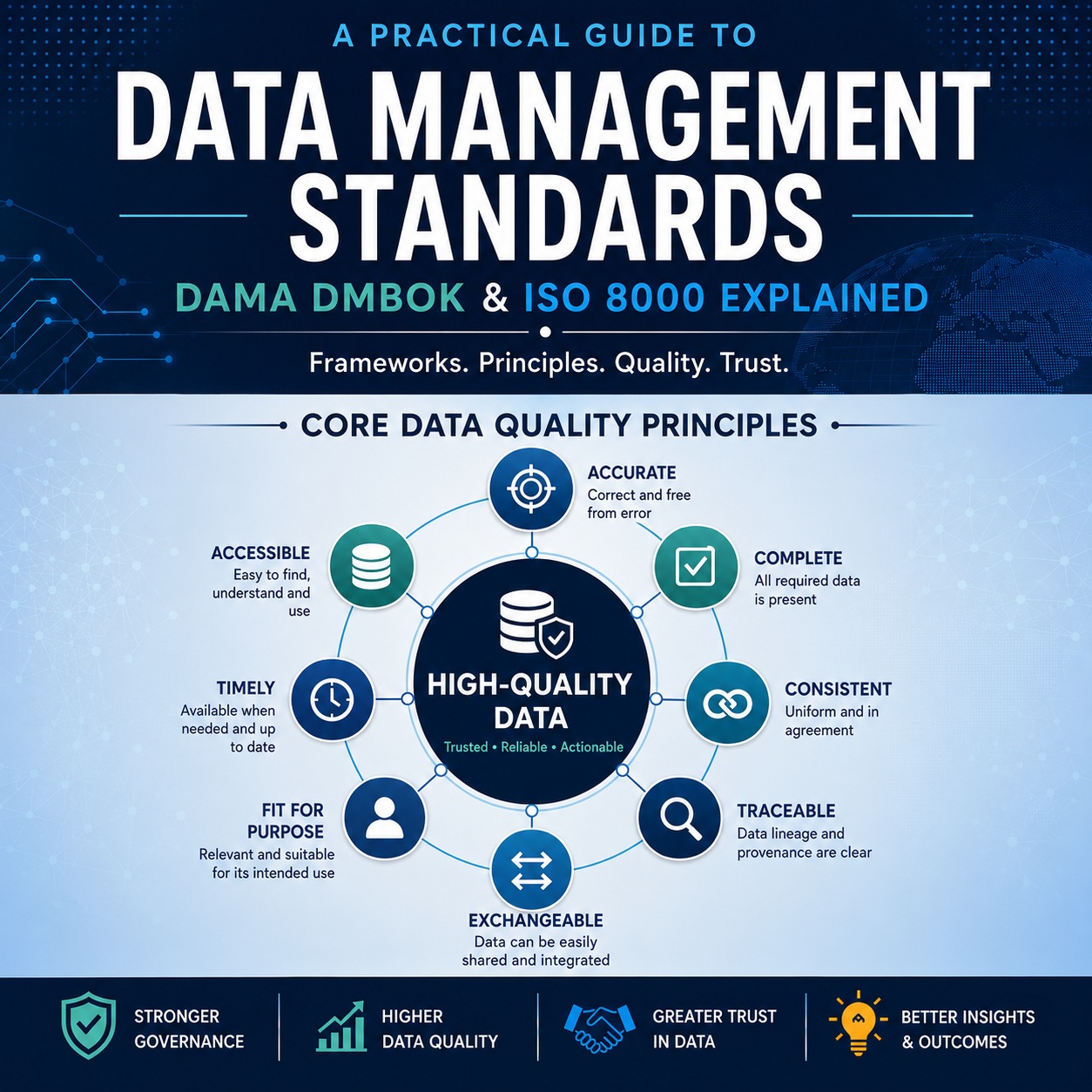
Why Data Management Standards Matter
Modern organizations depend on reliable data for:
- Strategic decision-making
- Digital transformation initiatives
- Artificial Intelligence and analytics
- Regulatory compliance
- Operational efficiency
- Customer experience
- Risk management
Without standardized practices, organizations often face:
- Duplicate or inconsistent data
- Poor data quality
- High integration costs
- Compliance risks
- Reduced trust in analytics
Data management standards help establish a common language, consistent processes, and measurable quality across the enterprise.
DAMA-DMBOK
The DAMA Data Management Body of Knowledge (DAMA-DMBOK), published by DAMA International, is one of the world's most widely adopted frameworks for enterprise data management.
Rather than prescribing a specific implementation methodology, DMBOK defines the knowledge areas, principles, roles, and practices that collectively constitute professional data management.
Core Knowledge Areas
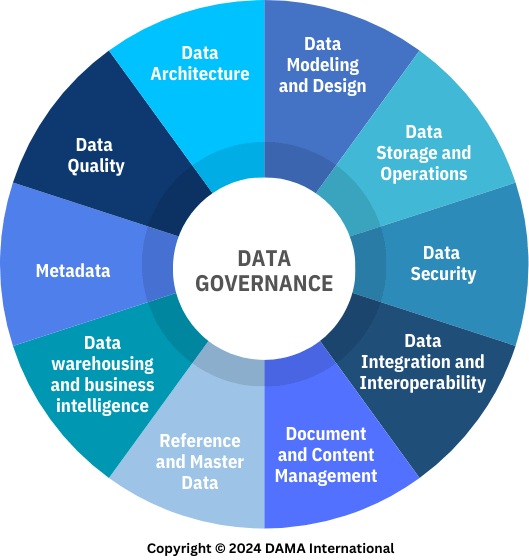
The DMBOK organizes data management into several interconnected knowledge areas, including:
- Data Governance
- Data Architecture
- Data Modeling and Design
- Data Storage and Operations
- Data Security
- Data Integration and Interoperability
- Document and Content Management
- Reference and Master Data
- Data Warehousing and Business Intelligence
- Metadata Management
- Data Quality
At the center of all these disciplines lies Data Governance, which provides direction, oversight, and accountability.
Official DMBOK Wheel
The most recognizable representation of DMBOK is the DAMA Wheel, illustrating the relationship among all knowledge areas.
ISO 8000
ISO 8000 is an international standard that focuses primarily on data quality and master data.
Unlike DMBOK, which covers the complete discipline of data management, ISO 8000 provides formal requirements and guidance for ensuring that data is:
- Accurate
- Complete
- Consistent
- Traceable
- Exchangeable
- Fit for purpose
The standard is especially valuable for organizations exchanging data across supply chains, governments, manufacturers, and multinational enterprises.
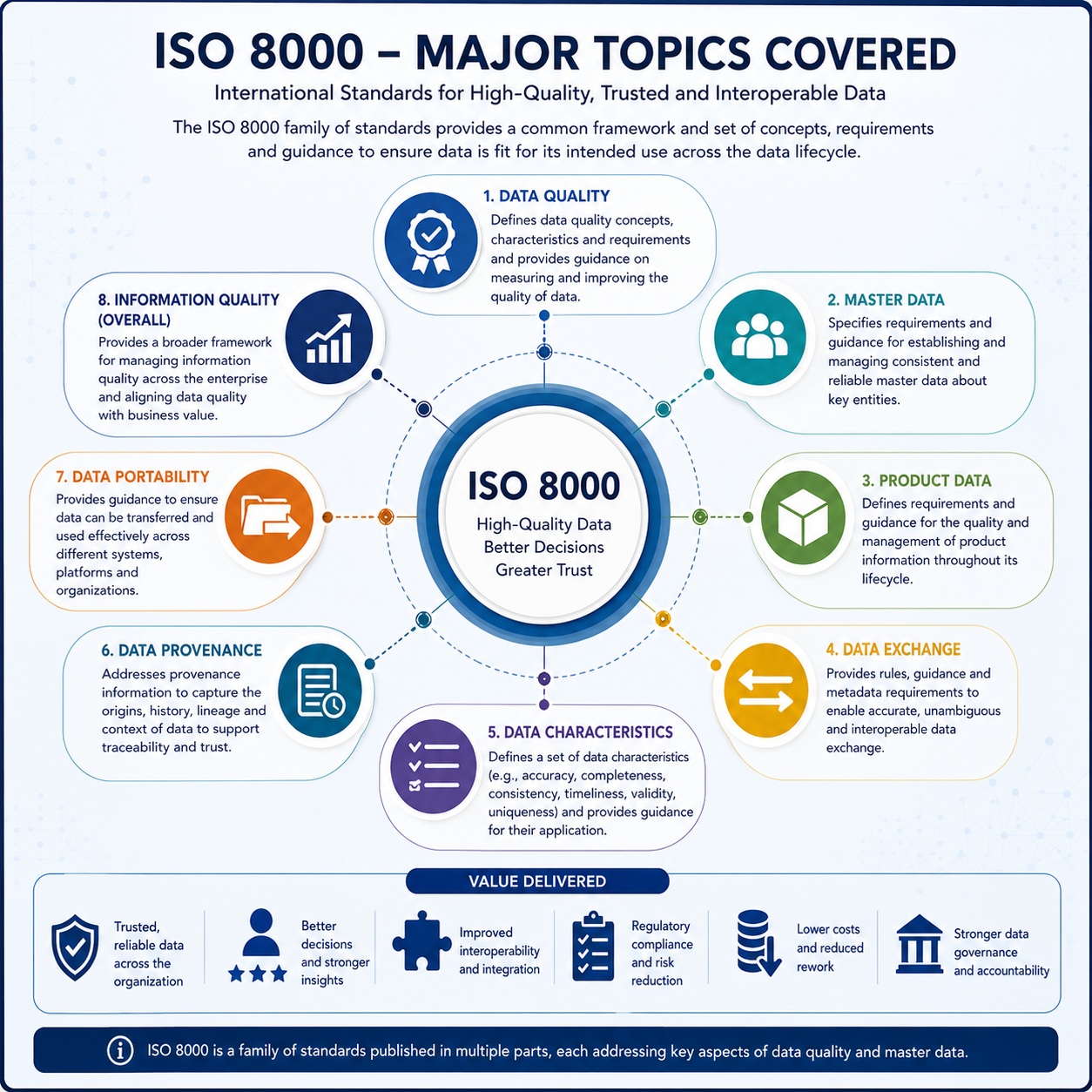
Major Topics Covered
The ISO 8000 family of standards includes guidance on:
- Data quality
- Master data
- Product data
- Data exchange
- Data characteristics
- Data provenance
- Data portability
- Information quality measurement
Its objective is to make data trustworthy regardless of where it originates.
DAMA-DMBOK vs ISO 8000
| Aspect | DAMA-DMBOK | ISO 8000 |
|---|---|---|
| Type | Framework / Body of Knowledge | International Standard |
| Scope | Enterprise data management | Data quality and master data |
| Purpose | Best practices | Formal requirements |
| Audience | Data managers, architects, governance teams | Organizations requiring standardized data quality |
| Certification | CDMP based on DMBOK | ISO conformity through organizational implementation |
These approaches are complementary rather than competitive. Many organizations use DMBOK to establish a comprehensive data management program while implementing ISO 8000 practices to improve measurable data quality.
Relationship with Other Frameworks
Organizations frequently integrate DMBOK and ISO 8000 with:
- ISO/IEC 38505 (Governance of Data)
- ISO/IEC 11179 (Metadata Registries)
- COBIT
- ITIL
- TOGAF
- DCAM (Data Management Capability Assessment Model)
- CMMI Data Management practices
Together, these frameworks support governance, architecture, operations, and continual improvement.
Implementing Data Management Standards
A practical implementation roadmap typically includes:
- Establish a Data Governance program.
- Define data ownership and stewardship.
- Develop enterprise data architecture.
- Create metadata and data catalogs.
- Assess and improve data quality.
- Standardize master and reference data.
- Implement security and privacy controls.
- Measure performance using data quality metrics.
- Continuously improve through governance reviews.
Key Benefits
Organizations implementing recognized data management standards commonly achieve:
- Higher confidence in business intelligence
- Better regulatory compliance
- Improved operational efficiency
- Reduced integration costs
- Higher-quality analytics and AI
- Better customer experiences
- Improved enterprise decision-making