
As modern IT environments grow increasingly complex, traditional methods of managing infrastructure and services are no longer sufficient. Cloud computing, microservices, DevOps pipelines, and hybrid environments generate massive volumes of data that exceed human capacity to analyze in real time. This challenge has given rise to AIOps (Artificial Intelligence for IT Operations)—a powerful approach that applies machine learning and advanced analytics to automate and enhance IT operations.
What Is AIOps?
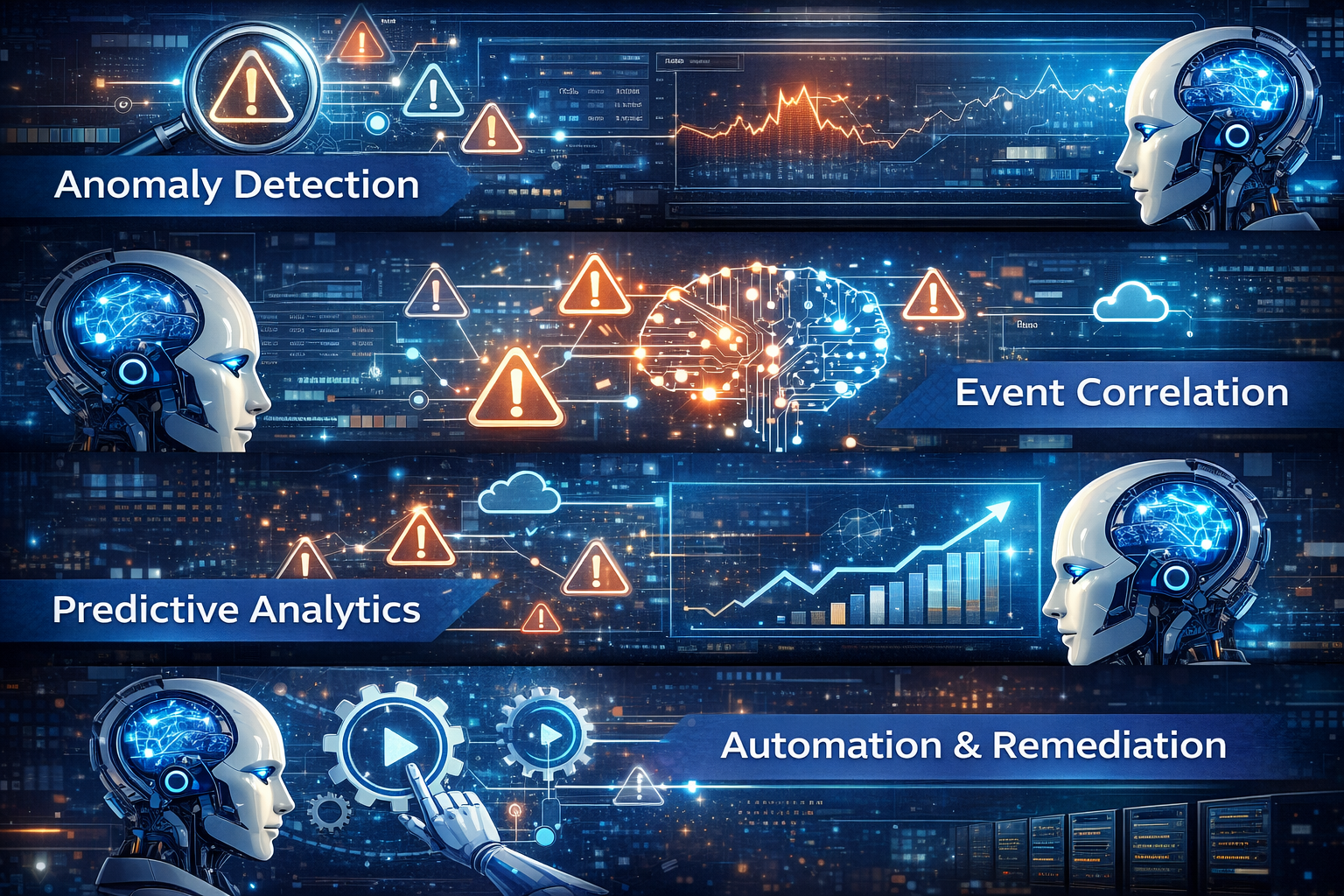
AIOps refers to the use of artificial intelligence, machine learning (ML), and big data analytics to manage and optimize IT operations. It enables organizations to collect, correlate, and analyze large volumes of operational data from multiple sources such as logs, metrics, events, and traces. By identifying patterns and anomalies, AIOps platforms can detect issues, predict failures, and recommend or even execute corrective actions automatically.
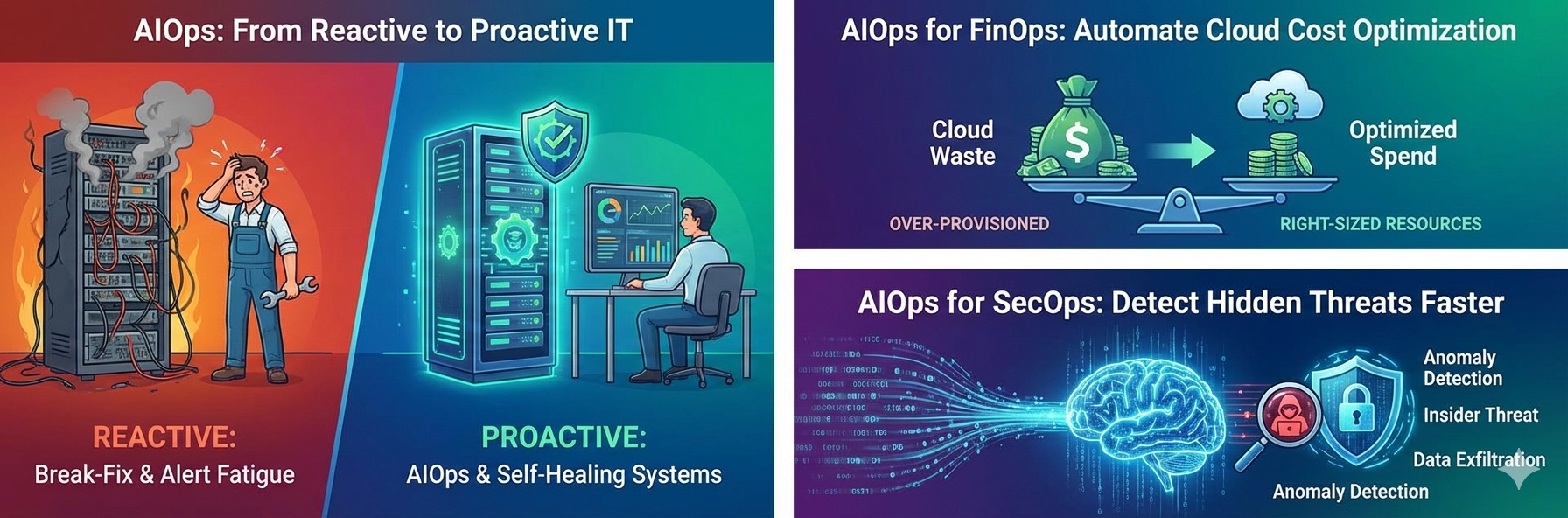
In essence, AIOps shifts IT operations from a reactive model to a proactive and predictive one.
Core Capabilities of AIOps
AIOps platforms typically provide the following capabilities:
1. Data Aggregation and Normalization
AIOps consolidates data from diverse sources—monitoring tools, service desks, cloud platforms, and CI/CD pipelines—into a unified view.
2. Anomaly Detection
Machine learning models identify abnormal behavior that deviates from established baselines, often detecting issues before users are impacted.
3. Event Correlation and Noise Reduction
AIOps groups related alerts and suppresses redundant ones, enabling IT teams to focus on root causes instead of symptoms.
4. Root Cause Analysis
By analyzing dependencies and historical patterns, AIOps accelerates the identification of underlying problems.
5. Predictive Analytics
AIOps can forecast incidents, capacity issues, or performance degradation, allowing preventive action.
6. Automation and Remediation
Advanced platforms integrate with orchestration tools to trigger automated responses, such as restarting services or reallocating resources.
AIOps vs. Traditional IT Operations
Traditional monitoring relies on static thresholds (e.g., "Alert me if CPU > 90%"). In modern, fluctuating environments, this leads to "alert fatigue"—thousands of notifications that often hide real problems.
| Feature | Traditional IT Ops | AIOps |
| Approach | Reactive (responds after failure) | Proactive (predicts failures) |
| Analysis | Manual, siloed by tool | Automated, cross-domain correlation |
| Baseline | Static, human-defined | Dynamic, ML-driven |
| Noise | High (frequent false positives) | Low (90%+ noise reduction) |
| Resolution | Hours (Mean Time to Repair) | Seconds to Minutes (often automated) |
AIOps and ITSM, DevOps, and Cloud
AIOps plays a critical role across modern IT practices:
-
IT Service Management (ITSM): Enhances incident, problem, and change management with intelligent insights and automation.
-
DevOps: Improves pipeline stability by identifying deployment risks and performance anomalies early.
-
Cloud and Hybrid Environments: Provides end-to-end visibility and intelligent monitoring across distributed systems.
Rather than replacing existing frameworks such as ITIL or COBIT, AIOps strengthens them by adding intelligence and speed.
Real-World Use Cases
1. Intelligent Incident Management
When a global payment gateway experiences latency, AIOps can correlate a database spike with a recent code deployment and a third-party API lag. It instantly notifies the correct team with the "smoking gun," rather than alerting everyone in the organization.
2. Cloud Cost Optimization (FinOps)
AIOps monitors resource utilization in real-time. If a cloud instance is over-provisioned for its current workload, the system can automatically downsize the resource or suggest more cost-effective instance types, significantly reducing "cloud waste."
3. SecOps Integration
By analyzing behavior patterns, AIOps helps Security Operations (SecOps) detect "insider threats" or unusual data exfiltration that traditional security rules might miss.
Challenges and Implementation Best Practices
Moving to AIOps is not just a software purchase; it is a shift in culture and data strategy.
- Data Quality is King: "Garbage in, garbage out." An AIOps model is only as good as the telemetry it consumes. Ensuring clean, standardized data is the first step.
- Start Small: Don’t try to automate everything at once. Focus on a high-friction area—like alert noise reduction—to prove value before expanding.
- The Skill Gap: Your team will need to transition from "firefighters" to "platform engineers" who manage the AI models rather than individual servers.
- Trust the Machine: Implementation often fails when teams ignore AI insights. Build trust through "Explainable AI" (XAI) features that show the logic behind the system's decisions.
The Future of AIOps
As AI models mature, AIOps will evolve toward autonomous IT operations, where systems self-heal, self-optimize, and continuously learn. The convergence of AIOps with generative AI, observability platforms, and enterprise architecture will further enhance decision-making and operational excellence.
In a world where digital services are mission-critical, AIOps is no longer optional—it is a strategic necessity.
AIOps: إحداث نقلة نوعية في عمليات تقنية المعلومات باستخدام الذكاء الاصطناعي
مع تزايد تعقيد بيئات تقنية المعلومات الحديثة، لم تعد الأساليب التقليدية في إدارة البنية التحتية والخدمات كافية. فقد أدت الحوسبة السحابية، والخدمات المصغّرة (Microservices)، وممارسات DevOps، والبيئات الهجينة إلى توليد كميات هائلة من البيانات التشغيلية التي تفوق قدرة الإنسان على تحليلها في الوقت الفعلي. ومن هنا ظهر مفهوم AIOps (الذكاء الاصطناعي لعمليات تقنية المعلومات) كنهج متقدم يعتمد على الذكاء الاصطناعي والتعلّم الآلي لتحسين وأتمتة عمليات تقنية المعلومات.
ما هو AIOps؟
يشير AIOps إلى استخدام تقنيات الذكاء الاصطناعي والتعلّم الآلي وتحليلات البيانات الضخمة لإدارة وتحسين عمليات تقنية المعلومات. حيث يتيح للمؤسسات جمع وربط وتحليل كميات كبيرة من البيانات التشغيلية من مصادر متعددة مثل السجلات (Logs)، والمؤشرات (Metrics)، والأحداث (Events)، وآثار التتبّع (Traces).
ومن خلال اكتشاف الأنماط والانحرافات، تمكّن منصات AIOps فرق تقنية المعلومات من اكتشاف المشكلات مبكرًا، والتنبؤ بالأعطال المحتملة، واقتراح أو تنفيذ إجراءات تصحيحية تلقائيًا.
وبذلك، ينتقل تشغيل تقنية المعلومات من نموذج تفاعلي إلى نموذج استباقي وتنبؤي.
القدرات الأساسية لـ AIOps
توفر منصات AIOps مجموعة من الإمكانات الجوهرية، من أهمها:
1. تجميع البيانات وتوحيدها
تجميع البيانات من مصادر متعددة مثل أدوات المراقبة، وأنظمة إدارة الخدمات، والمنصات السحابية، وخطوط CI/CD في رؤية موحدة.
2. اكتشاف الشذوذ والانحرافات
استخدام نماذج التعلّم الآلي لاكتشاف السلوك غير الطبيعي مقارنة بالأنماط المعتادة، وغالبًا قبل تأثر المستخدمين.
3. ربط الأحداث وتقليل الضوضاء
دمج التنبيهات المتشابهة وإلغاء التنبيهات المكررة، مما يسمح للفرق بالتركيز على الأسباب الجذرية بدلًا من الأعراض.
4. تحليل السبب الجذري
تسريع تحديد المشكلات الأساسية من خلال تحليل الاعتماديات والأنماط التاريخية.
5. التحليلات التنبؤية
التنبؤ بالحوادث المستقبلية، أو مشاكل السعة، أو تدهور الأداء، مما يتيح اتخاذ إجراءات وقائية.
6. الأتمتة والمعالجة الذاتية
التكامل مع أدوات الأتمتة لتنفيذ إجراءات تصحيحية تلقائيًا مثل إعادة تشغيل الخدمات أو إعادة تخصيص الموارد.
مقارنة: AIOps مقابل العمليات التقليدية
تعتمد المراقبة التقليدية على عتبات ثابتة (مثل: "أرسل تنبيهاً إذا تجاوز استهلاك المعالج 90%"). في البيئات الحديثة المتقلبة، يؤدي هذا إلى "إرهاق التنبيهات" — آلاف الإخطارات التي غالباً ما تخفي المشكلات الحقيقية.
| الميزة | عمليات تقنية المعلومات التقليدية | AIOps |
| النهج | رد فعل (بعد وقوع العطل) | استباقي (يتنبأ بالأعطال) |
| التحليل | يدوي، ومنعزل حسب الأداة | مؤتمت، ويربط بين مختلف النطاقات |
| خط الأساس | ثابت، يحدده البشر | ديناميكي، يقوده تعلم الآلة |
| الضجيج | مرتفع (تنبيهات كاذبة متكررة) | منخفض (تقليل الضجيج بنسبة +90%) |
| وقت الإصلاح | ساعات (متوسط وقت الإصلاح) | ثوانٍ إلى دقائق (غالباً مؤتمت) |
AIOps وعلاقته بـ ITSM وDevOps والحوسبة السحابية
يلعب AIOps دورًا محوريًا في دعم ممارسات تقنية المعلومات الحديثة، مثل:
-
إدارة خدمات تقنية المعلومات (ITSM): تحسين عمليات إدارة الحوادث والمشكلات والتغييرات من خلال التحليل الذكي والأتمتة.
-
DevOps: تعزيز استقرار خطوط التطوير والنشر من خلال اكتشاف المخاطر والانحرافات مبكرًا.
-
البيئات السحابية والهجينة: توفير رؤية شاملة ومراقبة ذكية للأنظمة الموزعة.
ولا يهدف AIOps إلى استبدال أطر العمل مثل ITIL أو COBIT، بل يعززها بإضافة عنصر الذكاء والسرعة في اتخاذ القرار.
حالات استخدام من الواقع
1. الإدارة الذكية للحوادث
عندما تواجه بوابة دفع عالمية تأخيراً في الاستجابة، يمكن لـ AIOps ربط طفرة في قاعدة البيانات مع تحديث برمجى أخير وتأخر في واجهة برمجة تطبيقات (API) خارجية. تقوم المنظومة فوراً بإخطار الفريق المسؤول بـ "الدليل القاطع"، بدلاً من إرسال تنبيهات عامة للجميع.
2. تحسين تكاليف السحابة (FinOps)
تراقب AIOps استهلاك الموارد في الوقت الفعلي. إذا تم تخصيص موارد سحابية أكبر من الحاجة، يمكن للنظام تلقائياً تقليل الحجم أو اقتراح أنواع خوادم أكثر فعالية من حيث التكلفة، مما يقلل "الهدر السحابي" بشكل كبير.
3. التكامل مع العمليات الأمنية (SecOps)
من خلال تحليل أنماط السلوك، تساعد AIOps فرق الأمن في اكتشاف "التهديدات الداخلية" أو تسريب البيانات غير المعتاد الذي قد تغفل عنه قواعد الأمان التقليدية.
التحديات وأفضل ممارسات التنفيذ
الانتقال إلى AIOps ليس مجرد شراء برمجيات؛ بل هو تحول في الثقافة واستراتيجية البيانات.
-
جودة البيانات هي الأساس: "بيانات سيئة تؤدي لنتائج سيئة". نموذج AIOps يكون قوياً بقدر جودة البيانات التي يستهلكها.
-
ابدأ صغيراً: لا تحاول أتمتة كل شيء دفعة واحدة. ركز على منطقة ذات ضغط عالٍ — مثل تقليل ضجيج التنبيهات — لإثبات القيمة قبل التوسع.
-
فجوة المهارات: سيحتاج فريقك للتحول من "إطفائيي حرائق" إلى "مهندسي منصات" يديرون نماذج الذكاء الاصطناعي بدلاً من إدارة الخوادم الفردية.
-
الثقة في الآلة: غالباً ما يفشل التنفيذ عندما يتجاهل الفرق رؤى الذكاء الاصطناعي. ابدأ ببناء الثقة من خلال ميزات "الذكاء الاصطناعي القابل للتفسير" (XAI).
مستقبل AIOps
مع تطور نماذج الذكاء الاصطناعي، يتجه AIOps نحو العمليات الذاتية لتقنية المعلومات، حيث تصبح الأنظمة قادرة على الإصلاح الذاتي، والتحسين المستمر، والتعلّم التلقائي. كما أن تكامل AIOps مع الذكاء الاصطناعي التوليدي ومنصات المراقبة المتقدمة وهندسة المؤسسات سيُحدث نقلة نوعية في جودة القرارات التشغيلية والتميز المؤسسي.
وفي عالم أصبحت فيه الخدمات الرقمية عنصرًا حاسمًا لنجاح الأعمال، لم يعد AIOps خيارًا إضافيًا، بل أصبح ضرورة استراتيجية لبناء مؤسسة تقنية معلومات جاهزة للمستقبل.